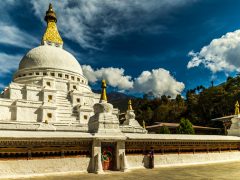
Jambay Lhakhang, one of the most important temples in the country is dedicated to Maitreya, the Buddha of the Future. Historians assert that Buddhism appeared in the country for the first time along with the establishment of this temple in the 7th century. Guru Rinpoche used Jambay Lhakhang as a residence when he visited Bumthang. Even today there is still a small room above the entrance of the temple that people believe was the seat of the Guru.
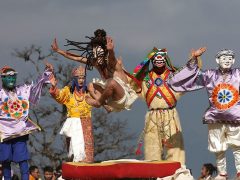
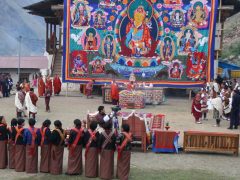
This temple holds an annual consecration festival called the Jambay Lhakhang Drup. If this consecration festival has in fact taken place during the temple’s consecration over thirteen hundred years ago, then it may be the oldest festival in Bhutan. It is normally held between the 15th to the 17th of the 9th Bhutanese month. Unique features of this festival would be the Fire Offering and the Naked Dance. It is believed that one’s obstacles will be burnt away by successfully passing through the Fire Offering. As for the Naked Dance, additional purification or removal of obstacles will be accomplished for those who witness the Naked Dance.
Day 1: This day is known as Tenzhu Mewang Jinseg- ‘receiving the blessings of relics and the fire offering.’
All treasure objects revealed by Terton Dorje Lingpa are brought to Jampay Lhakhang from the temple in Chakhar Lama’s private residence on the morning of the 15th day of the Bhutanese calendar. Chamkhar Lama is the owner of all these relics that have been passed down to him by his ancestors. He also organizes and leads the festival yearly. The objects are moved in a grand religious procession accompanied by music and dances. During this procession, people line the route and receive blessing from the relics. These objects are considered to be sacred and ancient as Guru RInpoche originally blessed them before they were concealed in the 8th century. Prayer is led by Chakhar Lama along with other lay priests inside Jampay Lhakhang.
Fire Offering (Mewang): The Fire Offering Prayer begins by 10:00 p.m. The head Lama wards off evil spirits going through each individual chapel of Jampay Lhakhang. Mustard seed mixed with white fire stone gravel will be thrown by the Lama inside and outside of the temple. The Lama wears a wrathful apron and a black hat. Following the lama are assistant lamas carrying a painted triangular torma made of dough, which represents magical daggers or deities that serve to pierce the evil spirits. The torma is tossed into the fire. After the offering, the environment is believed to be blessed and purified. Local people contribute firewood, oil, and other materials for the fire. It is believed that one’s obstacles will be burnt away by successfully passing through the Fire Offering.
Black Hat Dance:
Gomazhi Dance
Tre Ging Dance
Tshog Cham Dance
Dance of Nyulema:
The Naked Dance: Performed just before midnight with a presence of a bonfire which is circled by the dancers. Dancers have dotted ink on their faces and are naked, with the exception of 2 dancers who wear a short cloth. People receive blessing from the dancers and taking photographs are not permitted. People believe that those who receive such blessings are able to nakedly perceive their inner wisdom and will become fully enlightened.
Day 2: This day is called Tsukton meaning ‘beginning’. This marks the official start of the festival since the ground has been blessed and purified by the events of Day One. The events begin at around 9.30 with a chipdrel ceremony. Following that, a marchang ceremony to welcome all and multiple mask dances are performances including the following:
Yamantaka Yab-Yum Dance (Shinje Yab Yum Dance)
Peling Ging Sum (Driging, Juging, Ngaging)
Legend- based Dance
Day 3: Called Barton meaning ‘middle’. The main feature of this day is the performance of prayers seeking to secure luck through the blessings of the warrior-god. The prayer of invocation is performed in the early morning inside the temple. Six different mask dances are revealed in this day (Refer below). At the end of the day, a grand ritual called ‘torjab’ is conducted inside the temple. This ritual seeks to ensure the well being and peace for all.
Zhanag Cham (Black Hat Dance with Dagger)
Shazam Cham (Stag Dance)
Durdag Cham (Lord of cremation ground dance)
The Wrathful Ging and Tsholing Dance
Drametse Nga Cham (Drum Dance from Drametse)
Pholay and Molay Cham (The Dance of Noble Men and Charming Ladies)
Day 4: On the last day, the program consists of these following dances:
Dance of Four Groups of Garuda
Stick Dance
Drum Dance of Dorji Lingpa
A group dance centered around the Lord of Death
The festival concludes with the display of the treasure relics (termas) of Dorji Lingpa